
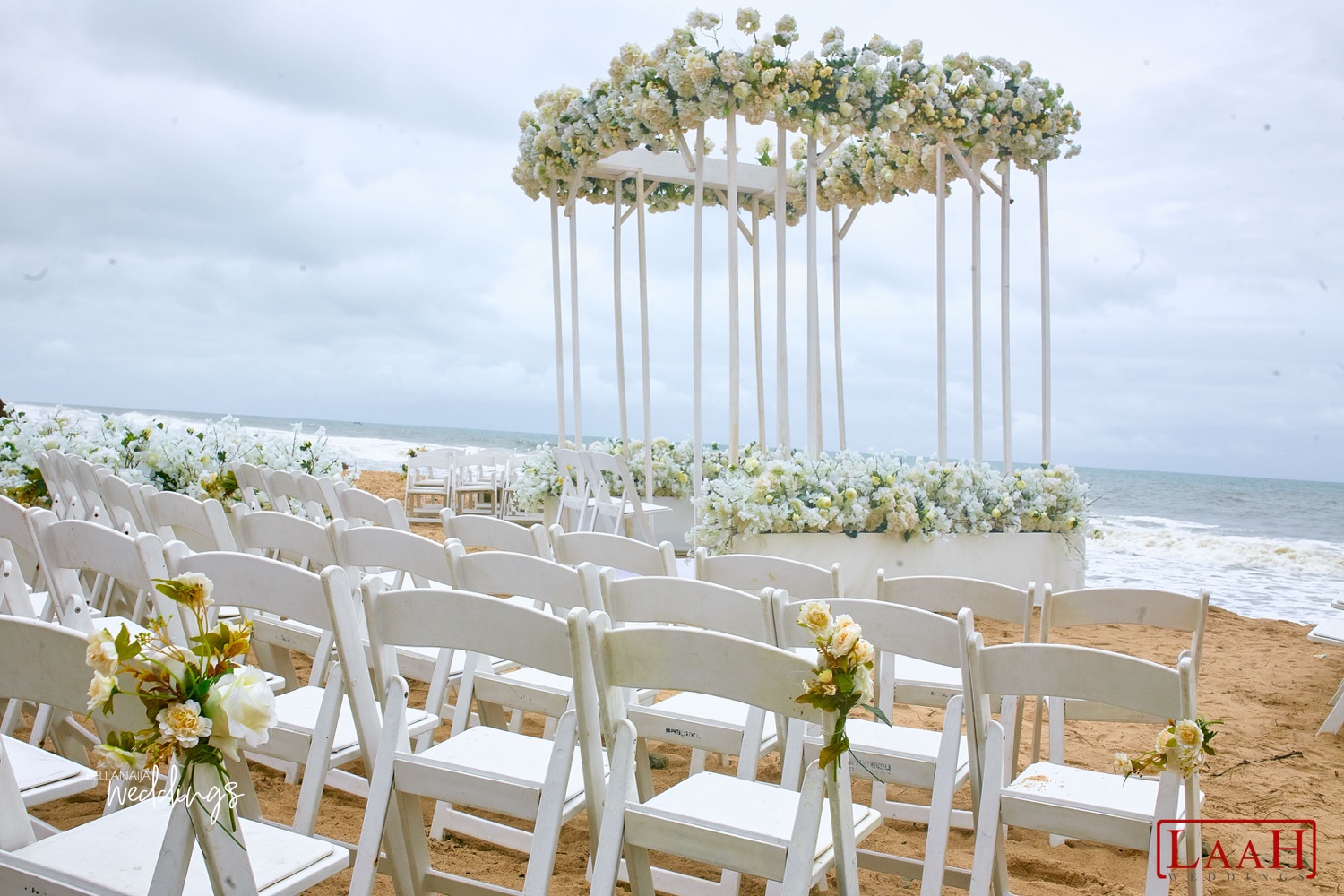
 Ask a few event planners what couples are requesting now, and “outdoor” comes up more than it used to. Gardens, lawns, beachfronts, courtyards, open-air venues with trees overhead. Couples want natural light in their photos, room for guests to move around, and a setting that already looks good before any décor goes up.
We understand the appeal. An outdoor wedding feels relaxed. Guests aren’t packed under a hall ceiling, the photographs look softer, and the venue does half the styling for you. But an outdoor wedding is also harder to plan than an indoor one, and couples who skip that conversation tend to find out on the day.
What we plan for
- Weather. Rain, heat, and wind all affect an outdoor event. We always plan a backup, whether that’s a tent, a covered section or a second venue, and we agree on a decision date with you well before the wedding.
- Power. Sound, lighting, and cooling all need reliable electricity. We bring backup generators and keep them away from the guest area so the noise doesn’t carry.
- Comfort. Shade for guests, fans or cooling where needed, and seating arranged around the sun’s position. If your ceremony is at 2pm, nobody should be squinting into the sun.
- Timing. Late afternoon ceremonies usually work best. The light is better for photography and the heat is easier on guests and on make-up.
- Ground and access. Heels on grass, long dresses on uneven paths, elderly guests who need a flat route. These things are easy to overlook until someone is struggling.
Does it cost less? Not always. You may save on décor, but you’ll spend on tenting, flooring, power, lighting and rentals that an indoor hall already includes. We’ll give you a realistic budget before you commit.
If you’re thinking about an outdoor wedding, [book a free consultation] and we’ll walk through your venue with you.